
1st International Workshop on Circuits and Systems for Aerospace Applications

April 13, 2027 – Florianópolis – SC - BRAZIL

About

Context

The 1st International Workshop on Circuits and Systems for Aerospace Applications (WCSAA 2027) is held within the framework of a Brazil–France research network bringing together researchers from the Federal University of Santa Catarina (UFSC), the University of Vale do Itajaí (UNIVALI), the Federal University of Rio Grande do Sul (UFRGS), the Federal University of Rio Grande do Norte (UFRN), and FEI University Center, in partnership with the Institut d'Électronique et des Systèmes (IES) at the Université de Montpellier and the Institut des Nanotechnologies de Lyon (INL) at École Centrale de Lyon, France. The event also integrates the activities of the Santa Catarina Space Economy Observatory (OESC) (oesc.ufsc.br).

Co-organized by UNIVALI and UFSC, the workshop is part of the Computer on the Beach program, held at SAPIENS PARK, and is conceived as a biannual forum for scientific exchange between the Brazilian and international communities dedicated to the design of electronic systems for critical environments.

Motivation

The growing demand for reliable embedded electronic systems in space and aeronautical platforms poses unprecedented challenges in miniaturization, processing autonomy, and resistance to ionizing radiation. The space environment exposes electronic devices to high-energy particles capable of causing Single Event Upsets (SEU), Single Event Transients (SET), and Total Ionizing Dose (TID) effects, which can compromise the operation of critical systems and make robust design, testing, and validation techniques imperative.

Brazil holds a strategic position in this landscape, with accumulated experience in small satellite missions, such as the FloripaSat series, developed at SpaceLab/UFSC, and a consolidated research community in microelectronics and embedded systems. The partnership with French centers of excellence amplifies this capacity and opens new avenues for innovative solutions in fault tolerance, programmable architectures, and embedded artificial intelligence for space.

Objectives

WCSAA 2027 aims to disseminate advanced knowledge on the design and validation of electronic circuits and systems for harsh environments; to foster integration among Brazilian and international researchers, engineers, and students; and to encourage the training of new researchers by bringing them closer to the frontier topics shaping the future of space electronics.

The program brings together internationally recognized experts: Prof. Dr. Eduardo Augusto Bezerra (UFSC), a pioneer in the development of national nanosatellite platforms; Prof. Dr. Luigi Dilillo (Université de Montpellier/CNRS), a leading authority on the reliability of electronic systems in radiation-intensive environments; and Prof. Dr. Fernanda Kastensmidt (UFRGS), a reference in fault-tolerant AI accelerators on FPGAs.

Target Audience

The workshop is aimed at researchers and faculty in microelectronics, electrical engineering, and computer science; engineers and industry professionals working on electronic systems for aerospace platforms; and undergraduate and graduate students seeking to start or deepen research careers in electronics applied to space and critical environments.

Institutional Support

WCSAA 2027 is supported by the Santa Catarina Research and Innovation Foundation (FAPESC).

Program

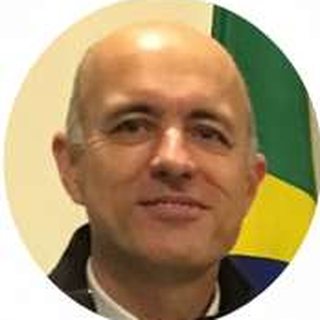
14:00 The FloripaSat bus and its evolution as a multi-mission platform for space applications

Foto de Prof. Dr. Eduardo Augusto Bezerra

Prof. Dr. Eduardo Augusto Bezerra

Federal University of Santa Catarina - Brazil

This talk presents the evolution of the FloripaSat embedded platform, developed at the Space Technology Research Laboratory (SpaceLab) of the Federal University of Santa Catarina (UFSC) as a reusable, multi-mission architecture for small satellites. The first generation was developed for FloripaSat-1, launched in 2019, providing valuable in-orbit experience and lessons that guided subsequent architectural improvements. These lessons led to FloripaSat 2.0, a redesigned platform comprising the main satellite service modules, including electrical power, onboard data handling, and telemetry, tracking and command, and conceived for reuse across missions with different payloads and objectives. FloripaSat 2.0 has since been adopted in multiple satellite projects, including GOLDS-UFSC, an environmental data collection mission scheduled for launch in March 2027. The talk discusses the evolution from the first flight-proven architecture to the current multi-mission platform, highlighting design decisions, reuse across missions, integration and verification experience, and lessons learned from successive developments. Finally, the ongoing development of FloripaSat 3.0 is presented, including new processing modules, new communication and system interfaces, support for higher-performance radio links, including S-band, and enhanced dependability features intended to increase the robustness and flexibility of future SpaceLab missions. The evolution of FloripaSat illustrates how flight experience, architectural reuse, and evolving mission requirements can drive the development of increasingly capable and dependable embedded systems for space applications.

Eduardo Augusto Bezerra received his Ph.D. from the Space Science Centre at the University of Sussex, UK. He is currently a Professor at the Federal University of Santa Catarina (UFSC), Brazil, and Head of the Space Technology Research Laboratory (SpaceLab). He has coordinated several satellite missions and research projects involving embedded systems and space technologies.

15:00 Dependability Assessment and Testing of Complex Electronic Systems in Radiation-Intensive Environments

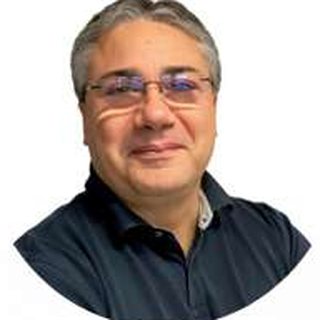
Foto de Prof. Dr. Luigi Dilillo

Prof. Dr. Luigi Dilillo

University of Montpellier – France

Ensuring the reliability and resilience of modern electronic systems has become increasingly important as technology scaling and architectural complexity make devices more vulnerable to faults. This talk presents the core principles of dependability and fault tolerance, introducing the main reliability challenges and the techniques used to mitigate their impact. It covers multiple redundancy schemes—including hardware, software, temporal, information-based, and hybrid solutions—as key approaches for improving system robustness. Special attention is devoted to radiation-induced failures, with an emphasis on Single Event Effects (SEEs) and their influence on electronic components. Memory devices are examined in detail through their organization, evolving technologies, and sensitivity to radiation-related errors. The talk also introduces radiation testing procedures and bitmap-driven statistical methods for assessing memory reliability, with actual case studies concerning ESA space missions. In addition, reliability issues in microcontrollers will be treated considering both architectural characteristics and the consequences of continued technology scaling. Emerging topics include low-observable electronic systems, enhanced observability mechanisms, and the dependability of artificial intelligence hardware accelerators.

Luigi Dilillo received his master's degree in Electronic Engineering from the Politecnico di Torino, Italy, in 2001, with specialization in Microelectronics. He received his Ph.D. degree in Information, Structures, and Systems from the University of Montpellier, France, in 2005. He did a post-doc at the University of Southampton, United Kingdom, and at CEA (French Commission for Atomic Energy). He is currently a researcher for the CNRS (French research agency) and chief of RADIAC team at IES (University of Montpellier). Luigi is author of more than 300 scientific articles in the domains of test and reliability of electronic devices and the effects of radiation on electronics in harsh environments, with applications in areas such as space, aerospace, energy, automotive and advanced computing. He has also contributed to numerous international research projects and has supervised PhD, postdoctoral, engineering and master's students.

16:30 Exploring Fault Tolerant Topologies of Neural Networks in SRAM-based All Programmable System on Chip (APSoC) in Harsh Environments

Foto de Profa. Dra. Fernanda Gusmão de Lima Kastensmidt

Profa. Dra. Fernanda Gusmão de Lima Kastensmidt

UFRGS

This talk presents recent advances in the design of fault-tolerant AI accelerators implemented on SRAM-based FPGAs for Earth observation applications in space environments. The increasing use of on-board processing in satellites enables real-time analysis of images captured from orbit, reducing communication bandwidth with ground stations and enabling faster decision making. Convolutional Neural Networks (CNNs) can be embedded into FPGA-based systems combining processors and hardware accelerators to perform tasks such as classification and object detection in satellite imagery. However, electronics deployed in space are exposed to radiation effects such as Total Ionizing Dose (TID) and Single Event Effects (SEEs), which may cause bit-flips, transient faults, or long-term degradation of electronic devices. These effects are particularly critical in SRAM-based FPGAs, where configuration memory upsets can alter the functionality of the logic that has been customized into the FPGA. The tutorial discusses the architecture of system-on-chip platforms integrating a RISC-V processor and AI accelerators implemented on FPGAs, exploring different accelerator designs such as FINN, ZynqNet, and systolic arrays. The design challenges associated with implementing CNNs in FPGA devices—such as limited computational resources, memory bandwidth, power constraints, and real-time processing requirements—are analyzed. To ensure reliable operation in radiation-prone environments, the tutorial introduces fault-tolerant design techniques, including Triple Modular Redundancy (TMR), configuration scrubbing, and error detection and correction mechanisms. Methods for evaluating reliability using fault injection campaigns targeting FPGA configuration memory are also presented. Through real case studies, including satellite missions and Earth-observation datasets such as SAT-6, the tutorial demonstrates how hardware/software co-design can enable robust AI processing in space applications.

Fernanda Gusmão de Lima Kastensmidt holds a degree in Electrical Engineering from the Federal University of Rio Grande do Sul (1997), a master's degree in Computer Science from the Federal University of Rio Grande do Sul (1999) and a PhD in Computer Science from the Federal University of Rio Grande do Sul (2003). Fernanda is a Full Professor at the Federal University of Rio Grande do Sul and was Coordinator of the Postgraduate Program in Microelectronics (PGMICRO) for 4 years and was Head of the Department of Applied Informatics for 2 years. She is currently the Administrative Director of the Brazilian Society of Microelectronics (SBMICRO). She has experience in the area of Microelectronics and Computer Engineering, with an emphasis on Hardware, working mainly on the following topics: radiation fault protection techniques, fault-tolerant system design, programmable architecture, FPGA, RISC-V processors, AI accelerators, qualification of systems and integrated circuits under faults and fault modeling. She is the author of the book Fault Tolerance Techniques for SRAM-based FPGAs published in 2006 by Springer and co-author of 3 other scientific books. She participated in the project of the payload of the NanoSat-BR1 satellite that was launched in June 2014 and NanoSat-BR2 where part of the payload is responsible for analyzing the effects of the South Atlantic Anomaly (SAA) on Integrated Circuits manufactured in nanometric technology launched in 2021.

Realização e patrocínio

Execução

Organização

Apoio institucional